


2 mins to read
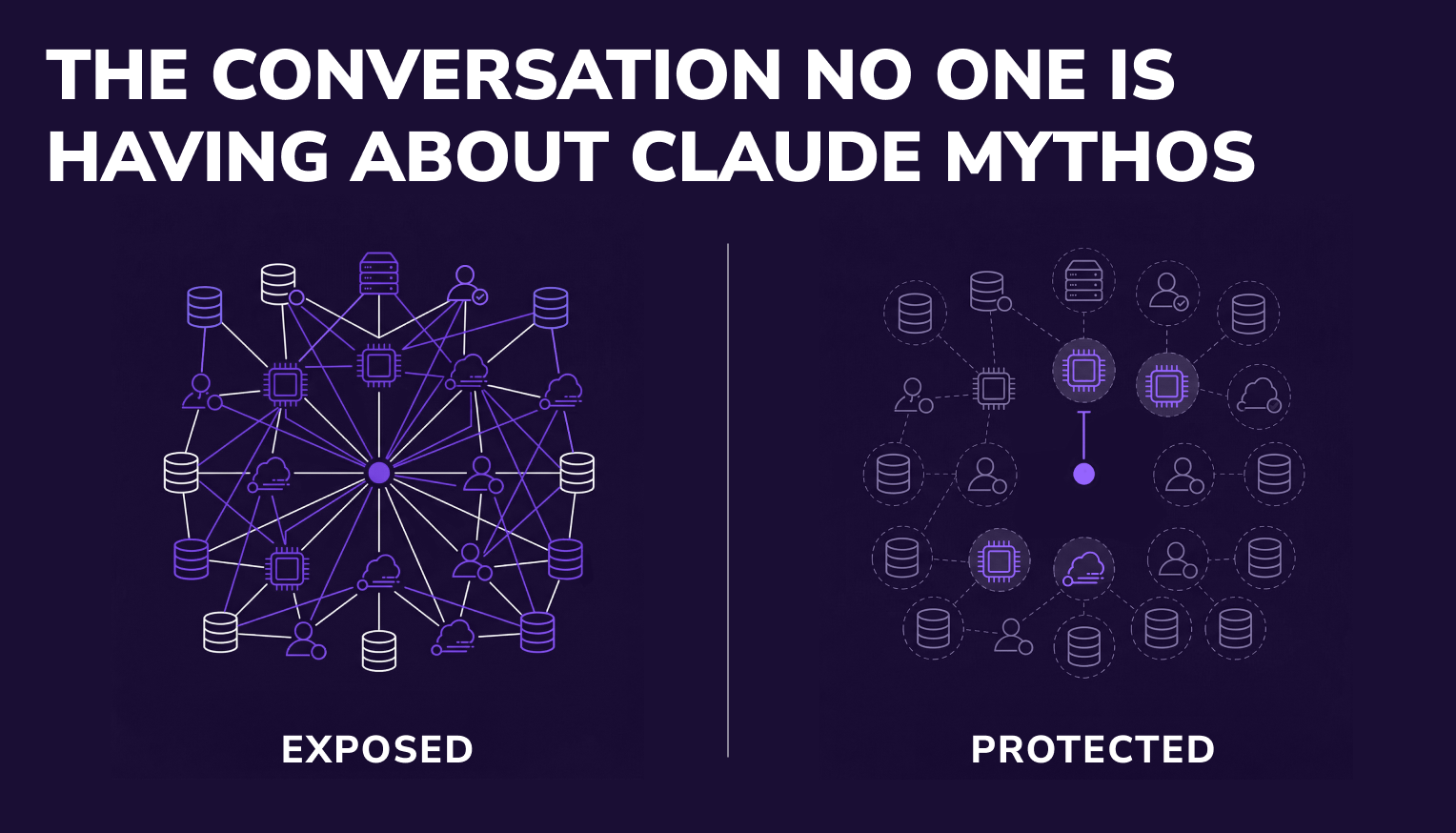
Mythos finds the vulnerability. Your permissions posture determines the damage.
At sufficient scale, Mythos-style breaches are inevitable. Patching matters, but no pipeline keeps pace with thousands of simultaneous zero-days. The relevant question isn’t how an attacker got in — it’s what they can reach once they’re inside. That answer depends entirely on your IAM posture. You can control it.
Permissions Are the Blast Radius
An attacker operating inside an environment with privilege sprawl – excessive permissions, unused identities, over-privileged service accounts, AI agents with broad and unnecessary access – has unrestricted opportunity. The blast radius is the entire environment. But an attacker inside an environment with enforced least privilege across every identity (agents included) is contained to whatever narrow scope is defined. They’re in, but they can’t go anywhere meaningful. This limits them, but it also gives IR teams time to act.
This is what separates a compromised AI agent with read access to a single S3 bucket from the same agent with wildcard permissions across storage, compute, and IAM.
So yes, the vulnerability is the door, but permissions determine the ultimate outcome.
Six Months
Alex Stamos, one of the security practitioners closest to this technology, put a number on the timeline publicly: it’ll be six months before open-weight models reach Mythos-level vulnerability-finding capability. At that point, the capabilities currently held behind a controlled partnership program become broadly accessible to researchers and defenders…and adversaries.
Six months won’t cut it for a multi-year IAM modernization program. It’s also not enough time to manually remediate years of permissions accumulation across a complex cloud environment. Most organizations can’t even delete their unused identities in the last six months – let alone build the necessary access controls to secure the adoption of autonomous agents.
If permissions determine the outcome, how do you enforce them fast enough to matter?
The critical problem is that getting to least privilege manually is not realistic in the time available. Years of cloud growth mean thousands of identities, each with permissions that accumulated
organically and were never cleaned up. Policy-by-policy remediation, at that scale, in that timeframe, simply isn’t feasible without automation.
Your Only Feasible Path
Sonrai’s Cloud Permissions Firewall leverages cloud-native controls to enforce least privilege across your org continuously – not as a one-time cleanup. As new identities are created, they join that default deny state and unused identities can be instantly quarantined. If attackers do get in, they’re left with nowhere to go.
Customers reach enforced least privilege in hours, not quarters.
It’s deployable now, in the window that exists before these capabilities proliferate. The organizations that use this window will have removed the most significant leverage an AI-level attacker carries: unrestricted access to cloud resources. The ones that don’t will hand that leverage to the first adversary capable enough to use it.
We were given six months. Attackers will gain some new capabilities, but what they can do with them will depend entirely on your permissions posture.
Tally Shea